
PRESS RELEASE
Published January 21, 2026
For years, digital wellness platforms followed the same playbook: publish more content. More blogs. More videos. More generic tips on diet, fitness, mindfulness, and stress reduction.
The problem? Information doesn’t equal transformation.
Despite an explosion of wellness apps and online health content, rates of digestive disorders, metabolic disease, sleep issues, and chronic stress continue to rise. Users aren’t failing. The model is.
The next generation of wellness platforms is abandoning static content libraries in favor of personalized, adaptive systems — and this shift mirrors a much older way of thinking about health.
Why Content-First Wellness Apps Stall Out
Most wellness apps assume that access to information leads to behavior change. In practice, users face three predictable issues:
- Conflicting advice across articles and experts
- No guidance on what applies to them
- Overwhelm that leads to abandonment
A low-carb article contradicts a plant-based one. Intermittent fasting works wonders for some and causes burnout in others. Meditation helps one person sleep better while another becomes more anxious.
Content platforms scale information, but they don’t scale relevance.
Personalization Is Not a Feature. It’s the Architecture.
True personalization goes beyond recommending articles based on clicks. It requires a system that understands how bodies differ, how digestion varies, how energy fluctuates, and how timing influences outcomes.
Modern health tech is beginning to recognize this. Personalized nutrition, adaptive fitness programming, and chronobiology-based sleep tools are gaining traction because they reduce decision fatigue and improve adherence.
In other words, users don’t want more content. They want fewer decisions and better outcomes.
Ancient Frameworks Solve a Modern Tech Problem
Long before apps and algorithms, Ayurveda approached health as a system governed by individual physiology. People were classified based on metabolic speed, digestive strength, thermal regulation, and stress response.
These weren’t personality labels. They were functional health models.
What makes Ayurveda particularly relevant to modern platforms is that it operates on structured rules. Which foods work best for which digestive patterns. When heavier meals are tolerated. How lifestyle routines should shift with stress, climate, or age.
This rule-based structure is exactly what modern personalization engines require.
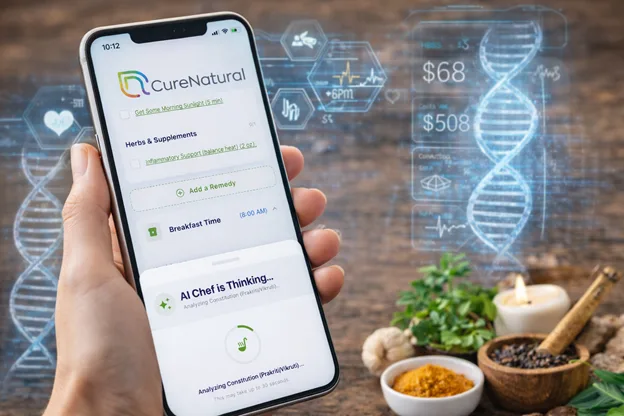
Educational platforms that translate these principles into modern learning — such as Ayurveda courses by CureNatural — demonstrate how ancient health logic can be adapted into scalable digital systems without becoming mystical or vague. CureNatural’s Ayurveda app integrates ancient intelligence and assistive intelligence, to make the user’s wellness experience completely personalized, down to the morning tea they drink, or sleep remedy for better sleep.
Why Timing Is the Most Ignored Variable in Wellness Tech
Most wellness apps focus on what users should do. Few address when.
Yet research consistently shows that timing influences metabolic efficiency, hormone release, cognitive performance, and sleep quality. Eating the right food at the wrong time can negate its benefits. Exercising too late in the day can disrupt sleep. Mindfulness practices can calm or overstimulate depending on timing and nervous system state.
Ayurveda integrates timing as a core variable, not an afterthought. That’s one reason its framework aligns so well with emerging chronobiology research.
When platforms incorporate timing alongside personalization, engagement improves because recommendations finally feel intuitive.
Why Static Content Can’t Compete with Adaptive Systems
Static content ages quickly. Adaptive systems improve over time.
Personalized wellness platforms can recalibrate recommendations based on user inputs, lifestyle changes, or stress levels. They reduce cognitive load by narrowing choices instead of expanding them.
This shift mirrors what happened in fintech, e-commerce, and media: personalization didn’t reduce value — it increased trust.
In health, trust is everything.
The Future: Hybrid Intelligence, Not More Articles
The future of digital wellness is not more blog posts or longer video libraries. It’s hybrid intelligence — combining structured traditional frameworks with modern data, UX design, and adaptive logic.
Ancient systems like Ayurveda provide the classification. Modern technology provides the delivery. Together, they offer something content libraries never could: clarity.
As digital health matures, platforms that prioritize personalization over information overload will define the next decade of wellness innovation.
The era of “one more article” is ending.
The era of “this works for you” has already begun.
link