
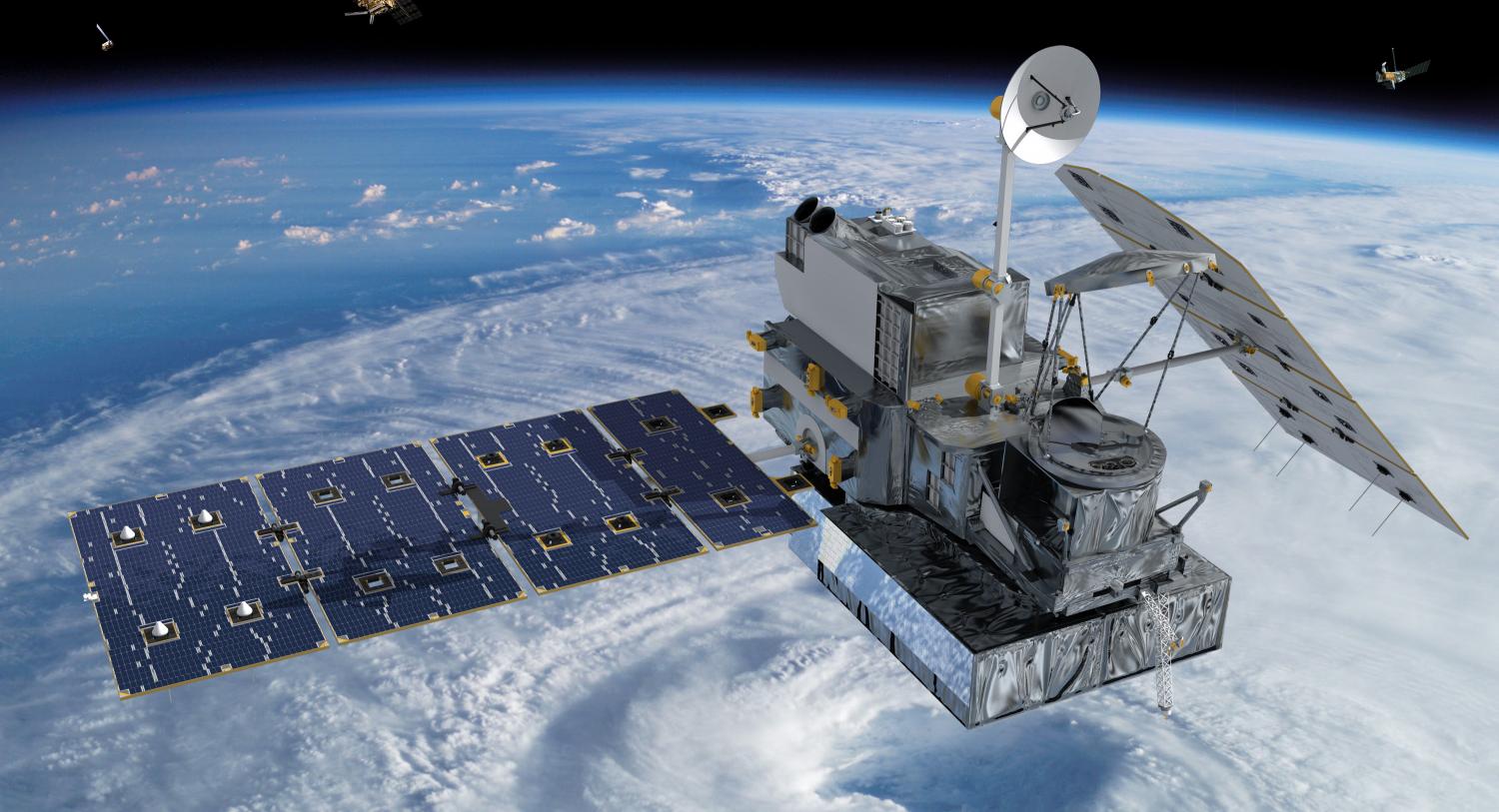
Climate & environmental monitoring
Satellites are some of the best sources of data for climate change research. Satellites monitor ocean temperatures and prevailing currents; data acquired by satellite-borne radars were able to show sea levels have been rising by three mm a year over the last decade. Imaging satellites can measure the changing sizes of glaciers, which is difficult to do from the ground due to the remoteness and darkness of the polar regions. Satellites can determine long-term patterns of rainfall, vegetation cover, and emissions of greenhouse gases.
Safety
Earth observation satellites can monitor ocean and wind currents as well as the extent of forest fires, oil spills, and airborne pollution; together this information helps organize emergency responders and environmental cleanup. Satellites can take the “search” out of “search and rescue” for people in distress in remote regions. Distress radio beacons directly linked to a search and rescue satellite can lead rescuers quickly and accurately to a land, sea, or air emergency location.
Land stewardship
Satellites can detect underground water and mineral sources; monitor the transfer of nutrients and contaminants from land into waterways; and measure land and water temperatures, the growth of algae in seas, and the erosion of topsoil from land. They can efficiently monitor large-scale infrastructure, for example fuel pipelines that need to be checked for leaks, which would require enormous hours of land- or air-based inspection. Imaging satellites produce high-resolution data of almost the entire landmass on earth; such data used to be a closely guarded military capability, but now, nearly anyone with an internet connection can find his house using Google Earth.
Development
Satellites are increasingly important to the developing world. For a country like India, with populations separated by rough terrain and different languages, communications satellites provides remote populations access to education and to medical expertise that would otherwise not reach them. Earth observation satellites also allow developing countries to practice informed resource management and relief agencies to follow refugee population migrations.
Space science
Before the Space Age, astrophysicists were limited to studying the universe via ground-based telescopes, and so could only use information from the parts of the electromagnetic spectrum that penetrated the Earth’s atmosphere. Many of the most interesting phenomena are best studied at frequencies that are best or only accessible from space—satellite telescopes have been critical to understanding phenomena like pulsars and black holes as well as measuring the age of the universe. The Hubble Space Telescope is arguably the most valuable astronomical tool ever built!
link