
Modern
manufacturing is now operating in a fast-changing environment where the need
for flexibility has become more than just a competitive advantage – it’s a
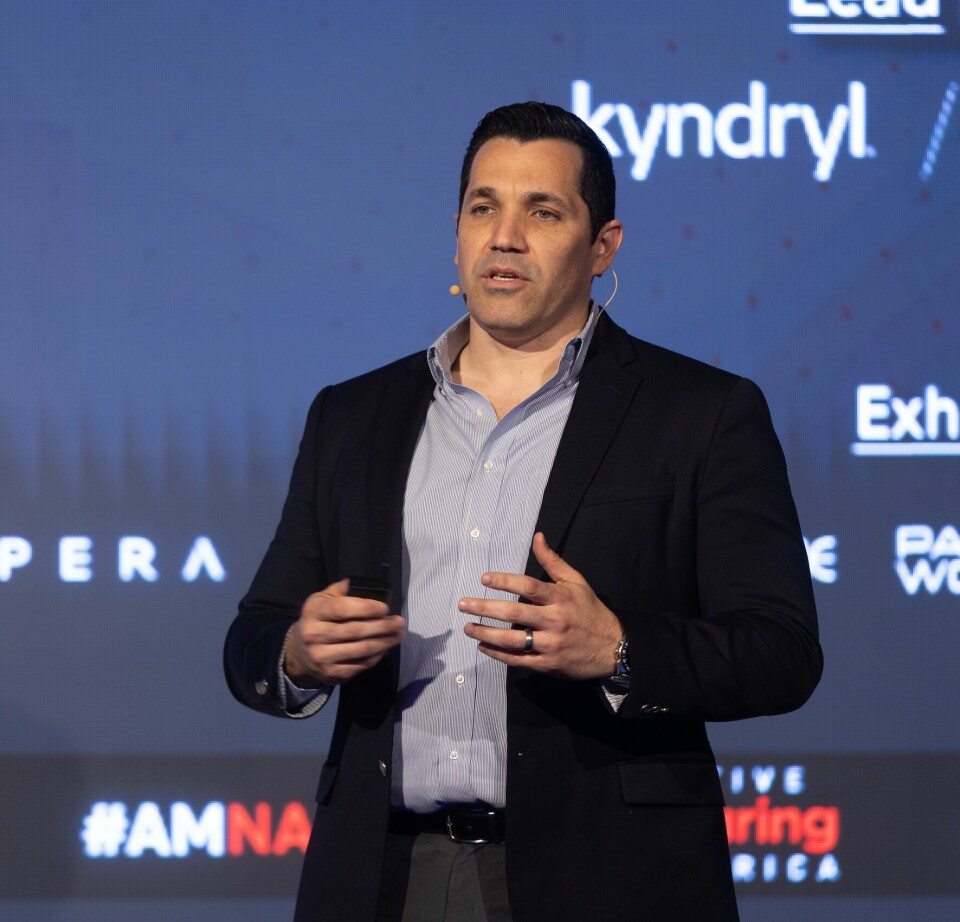
survival strategy. Dr. Miguel Saez, Senior Manager for Global Automation
Architecture Solutions and Standards at General Motors, offers key insights
into how artificial intelligence can fundamentally reshape robotic automation.
The complex manufacturing ecosystem
AMNA 2025: Auto industry looks to data driven, people-first digital transformation
The AMNA 2025 conference brought together OEMs, Tier 1s, suppliers and technology partners to discuss shared challenges and solutions as the automotive industry navigates rapid technology and economic changes
Manufacturers face a complex web of challenges that
demand high levels of adaptability. Socioeconomic changes impact industries,
creating a constant pressure to reimagine production capabilities. In the
automotive sector, this complexity is particularly acute, with manufacturers
grappling with a dynamic powertrain landscape.
The
traditional certainties of vehicle manufacturing have dissolved. Manufacturers
now must simultaneously develop and optimise production lines for electric
vehicles, hybrid technologies, and traditional combustion engines. This isn’t
just a technological challenge – it’s a strategic imperative that requires
unprecedented manufacturing flexibility.
Policy
changes and international tariff landscapes add another layer of complexity. A
manufacturing plant designed today must be capable of rapid reconfiguration,
able to pivot quickly in response to geopolitical shifts and emerging market
demands.
The limitations of current robotic automation
Despite significant technological advances, current
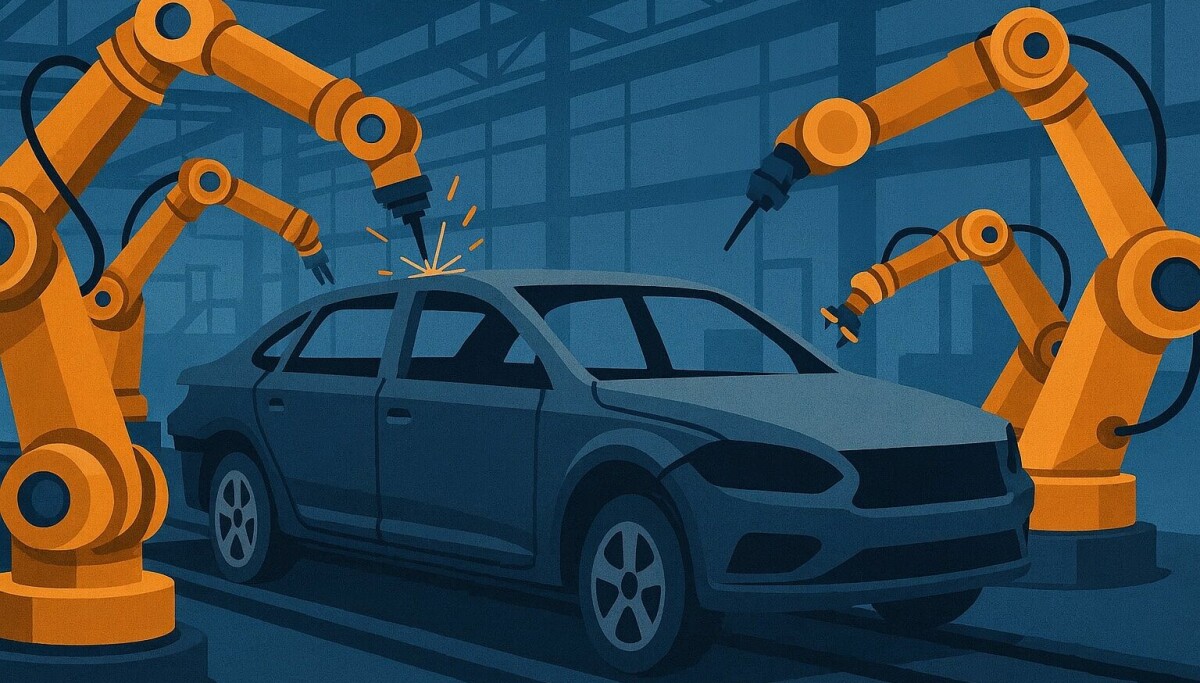
robotic automation systems have inherent limitations. Programming an industrial
robot is an incredibly intricate and time-consuming process. At General Motors,
Saez has observed that creating a single robot program can consume over 100
hours of specialised engineering time.
These
lengthy development cycles create substantial barriers, particularly for small
and medium-sized manufacturers who lack the resources of large automotive
companies. The complexity and cost of robotic integration have effectively
created a technological divide in manufacturing.
Evolving manufacturing intelligence
The development and adoption of artificial
intelligence in manufacturing is a nuanced process of continuous evolution.
Saez traces this progression, noting how our understanding of AI has shifted
from broad machine learning concepts to narrow generative applications, and now
towards a more comprehensive vision of intelligence. “We started first
with a very broad concept of AI where any sort of machine learning and genetic
algorithms we would call AI,” he explains. “Then we came back to a
very narrow concept of AI which is just thinking about generative AI, to now
going back to a broad concept of AI where we’re using reinforcement learning to
create intelligence.”
This
philosophical approach underpins a fundamental challenge; creating AI agents
that truly understand manufacturing contexts. Current AI models are trained on
vast datasets from sources like Reddit and books, but they lack the specialised
knowledge required for complex manufacturing environments.
The challenge of contextual understanding
The automotive industry exemplifies the complexity
of modern manufacturing. Manufacturers must simultaneously navigate rapidly
changing technologies, from electric and hybrid vehicles to traditional
combustion engines, while responding to dynamic socioeconomic shifts and policy
changes. “We are still trying to figure out as an industry what’s the
right mix between EVs, hybrids, ICE vehicles,” Saez observes, highlighting
the unprecedented challenges facing modern manufacturers.
Inside Ford’s brownfield automation strategy: Scalable robotics, in-house AI, and workforce-first deployment
At AMNA 2025, Ford revealed how it’s modernising legacy plants through modular automation, low-code AI inspection tools and scaling automation without massive CapEx.
These
challenges demand a radical rethinking of automation. Traditional robotic
programming is incredibly time-intensive, with Saez noting that “it takes
hours, probably 100 plus hours to create a program, touch up, do the
simulation, touch it up.” This complexity creates significant barriers,
especially for smaller manufacturers.
This
isn’t just about speed – it’s about developing a nuanced understanding of
manufacturing quality. The AI learns to distinguish between acceptable and
exceptional performance, much like an experienced human engineer, but with the
ability to process exponentially more data.
Creating manufacturing intelligence: a
sophisticated approach
The solution lies in developing AI that can
genuinely learn and adapt. Saez proposes a transformative framework centred on
teaching AI specific manufacturing skills. The goal is to create systems that
can:
- Understand fundamental manufacturing processes
- Break down complex tasks into teachable components
- Autonomously generate optimal operational paths
“The
first thing is teaching AI manufacturing skills,” Saez emphasises. This
means creating AI agents that can comprehend robotics at a fundamental level,
understanding how to perform tasks like welding, fastening, and precision
placement.
Leveraging digital twins
Central to this approach is the concept of the
digital twin – using a sophisticated virtual environment to serve as a learning
laboratory for AI systems. These digital replicas allow for wide ranging
experimentation, enabling AI to test thousands of iterations overnight,
leverage cloud computing and explore different operational
configurations.
“How
do we create an environment that is so light that I can run hundreds or
thousands of different iterations in a matter of seconds,” Saez explains,
highlighting the transformative potential of this approach.
“We need to start telling the AI agents this is what manufacturing is, this is what success looks like, this is what a good weld looks like,
Innovative learning methodologies
The training approaches are as innovative as the
technology itself. Saez describes methods like kinesthetic demonstration, where
human experts physically guide robots through complex movements, allowing AI to
learn through direct experience. Virtual experimentation provides another
powerful training ground, creating environments where robots can experiment,
fail, and learn without high physical prototyping costs.
“We
need to start telling the AI agents this is what manufacturing is, this is what
success looks like, this is what a good weld looks like,” Saez explains, highlighting
the importance of explicit knowledge transfer.
The ultimate vision: a comprehensive skills library
Intelligent automation rewrites the rules of vehicle production
Carmakers bet on humanoid robots and AI-driven systems to solve labour crises and accelerate output. The catch: success depends less on silicon than on skilful change management.

The
most ambitious aspect of Saez’s vision is creating a universal library of
manufacturing skills. This wouldn’t be limited to specific robot brands or
manufacturing sites but represent a transferable manufacturing intelligence
that could be deployed across different environments.
The
goal is to develop a system that can perform complex tasks like welding,
fastening, dispensing, and visual inspection with high levels of flexibility
and precision.
Strategic implementation and partnerships
Successful implementation requires a holistic
approach and Saez emphasises the importance of charting a clear technological
vision, avoiding compromises and building strategic
partnerships across industries. This includes collaboration with integrators,
solution providers, academic institutions, and both private and public organisations.
“Everyone’s
journey is going to be a little bit different,” Saez notes. “But it’s
important to chart the course. And once you identify a vision for how to use AI
in robotics, it’s important to not compromise.”
A new manufacturing paradigm
Dr. Saez’s vision represents more than
technological innovation – it’s a fundamental reimagining of manufacturing
itself. By creating intelligent, adaptive systems that can learn, optimize, and
evolve, manufacturers can build truly resilient operations that can respond as
dynamically as the markets they serve.
The
future of manufacturing is not about rigid automation, but about creating
intelligent ecosystems that can learn, adapt, and transform in real-time.
Smart Factories: From 2025 to 2026 — Advancing People, Process and Technology
In this AMS livestream, our editorial team and industry experts reflect on the year’s most significant developments and discuss what they mean for the future.
link