
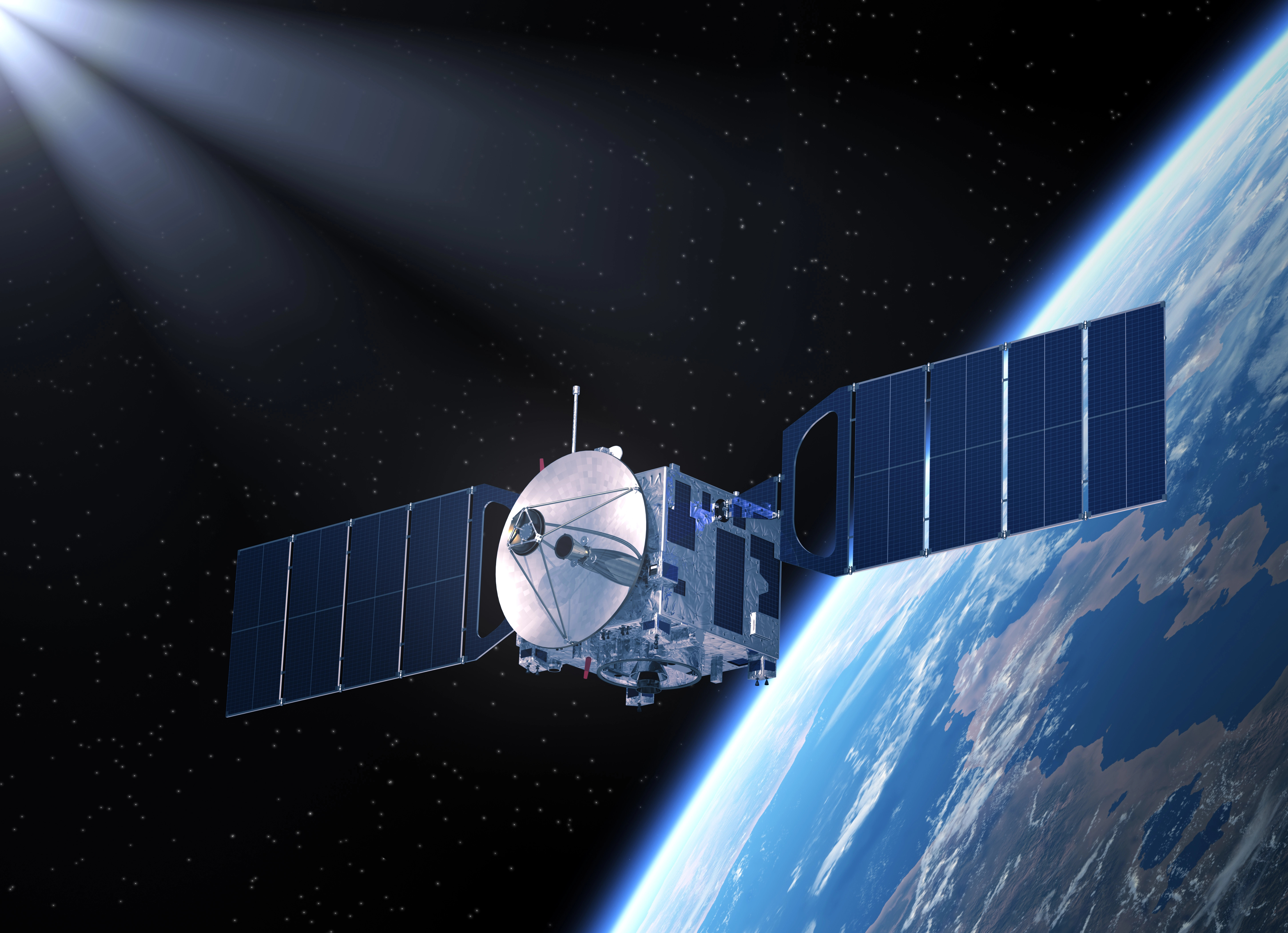
European security officials believe Russian space vehicles have intercepted communications from at least a dozen key European satellites, exposing vulnerabilities that could allow Moscow not only to gather sensitive data but potentially interfere with or disable spacecraft.
The suspected interceptions, which have not been previously reported, were described by officials speaking to the Financial Times on Wednesday, Feb. 4,, citing European intelligence, military, and space authorities monitoring Russian activity in orbit.
Russian satellites shadow European spacecraft
The activity involves two Russian satellites known as Luch-1 and Luch-2, which Western military and civilian space agencies have been tracking for several years. Officials say their maneuvers have intensified over the past three years, coinciding with heightened tensions between Moscow and the West following Russia’s full-scale invasion of Ukraine.
According to orbital data and ground-based telescope observations, the satellites have repeatedly maneuvered into close proximity with Europe’s most important geostationary satellites. These spacecraft provide communications services across Europe, the UK, and large parts of Africa and the Middle East.
Officials said the Russian satellites carried out risky close approaches, remaining near some European satellites for weeks at a time. Since its launch in 2023, Luch-2 alone has approached at least 17 European satellites operating in geostationary orbit.
Other Topics of Interest
Tusk in Kyiv: Security, Energy, Economy and a New Pragmatism
Donald Tusk’s visit to Kyiv signals a shift in Polish-Ukrainian relations, with energy security, defense cooperation and economic calculation replacing the emotional solidarity of 2022.
Unencrypted command links raise interference risks
European officials believe the Russian spacecraft positioned themselves within the narrow cones of data beams linking satellites to ground control stations. A senior European intelligence official said many European satellites transmit unencrypted command data, as they were launched years ago without advanced onboard computers or encryption capabilities.
“Both satellites are suspected of doing signals intelligence business,” said Major General Michael Traut, head of Germany’s military space command, referring to their practice of staying close to Western communications satellites.
Officials warned that once command data is intercepted and recorded, it could be used to interfere with satellite operations at a later stage. Such data could allow hostile actors to mimic legitimate ground controllers and transmit false commands to satellites.
Those commands could manipulate satellites’ thrusters, which are used for minor orbital adjustments, potentially knocking spacecraft out of alignment, forcing them to drift off course, or rendering them inoperable, officials said.
Space activity linked to hybrid warfare
The suspected satellite interceptions come as Russia steps up what European officials describe as hybrid warfare across the continent. This has included sabotage operations such as damage to subsea internet and power cables in recent years.
European intelligence and military officials are increasingly concerned that Moscow could extend such disruptive activity into space. Officials say Russia is already developing the capability to interfere with satellite systems beyond traditional espionage.
While other major powers have developed comparable space technologies, European officials assess that Russia has been more aggressive in using maneuverable satellites to closely shadow foreign spacecraft.
“Satellite networks are an Achilles heel of modern societies. Whoever attacks them can paralyze entire nations,” German Defense Minister Boris Pistorius said last September, warning that Russian activity in space posed a fundamental threat that Europe could no longer ignore.
Civilian satellites, military implications
The European satellites approached by Luch-1 and Luch-2 are primarily used for civilian purposes, including satellite television and commercial communications. However, officials said they also carry sensitive government and some military communications.
Although the Russian satellites are not believed to have the capability to directly jam or destroy other spacecraft, intelligence officials said they likely gathered large volumes of data that could later be used to disrupt satellite systems.
Such intelligence could support interference from the ground or enable future operations in orbit, officials said. Monitoring satellite activity can also reveal usage patterns, identify operators, and indicate the locations of ground terminals linked to specific spacecraft.
Signs of malfunction, expanding fleet
European officials said Russia appears to be expanding its space reconnaissance capabilities, pointing to the launch of additional satellites in recent years with maneuvering features similar to the Luch vehicles.
At the same time, officials believe Luch-1 may no longer be fully operational. On Jan. 30, ground-based telescopes observed what appeared to be a plume of gas emanating from the satellite, followed by signs of partial fragmentation.
The incident suggested a possible propulsion-related malfunction, officials said, though the full extent of the damage remains unclear.
European officials say the suspected interceptions underscore how space, long viewed primarily as a civilian and commercial domain, is increasingly becoming a contested arena in Russia’s confrontation with the West.
link