
The global economy is quietly entering a new industrial age, one built not on smoke-belching chimneys or assembly-line steel, but on the humming precision of robots, and the hard-to-source elements that power them.
According to UBS, we’re standing on the brink of a sweeping technological shift that could dramatically change how economies produce, compete and consume.
Think of it as the robot decade. Industrial automation is growing fast, and by 2030, the global stock of industrial robots is expected to more than double.
UBS estimates this number could reach nearly six million units, up from 3.7 million today, as the cost of hardware falls, artificial intelligence improves and the global workforce ages.
Replacing machines
It’s not just a story of machines replacing humans. What UBS sees is a multi-decade productivity transformation, where industries from automotive to electronics, and even construction, lean into automation to tackle labour shortages, rising wages and relentless efficiency pressures.
Take China: despite slowing growth, it’s still investing heavily in factory robotics to offset its shrinking workforce. Or Germany, where automotive giants are upping their robot count to maintain competitiveness.
Even the US, long a laggard in factory automation, is finally catching up, partly driven by reshoring ambitions and fiscal incentives like the CHIPS Act.
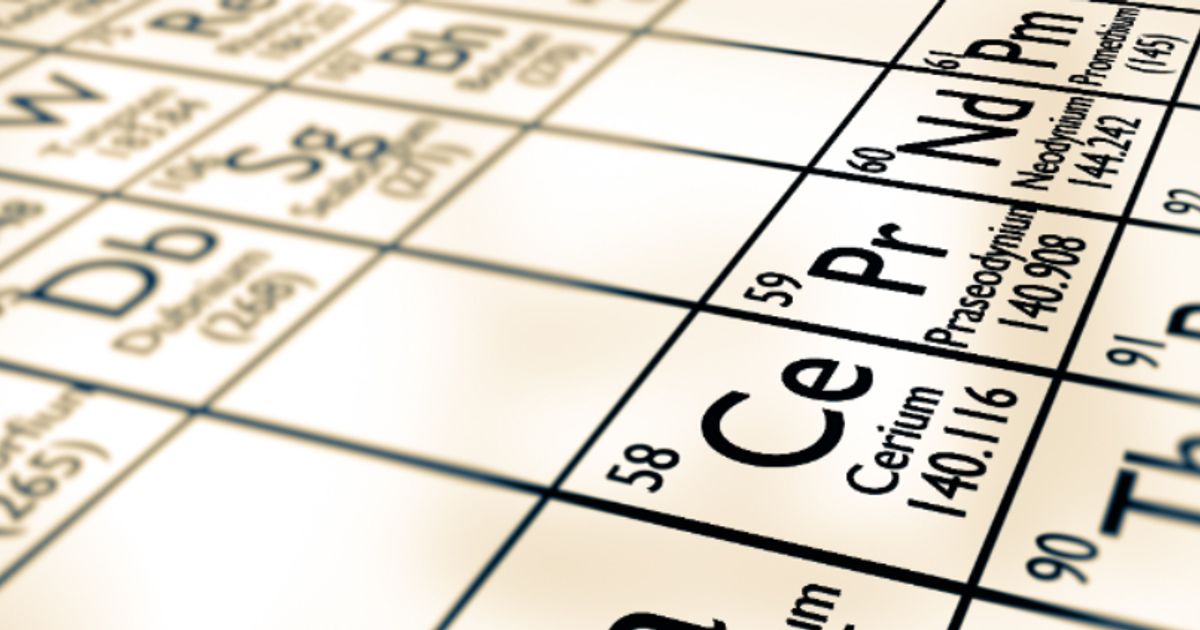
But there’s a catch, a metallic one. Most of these robots, or more precisely, the precision motors and sensors inside them, rely on a small group of materials known as rare earths. These include neodymium and dysprosium, which are critical to the permanent magnets used in electric motors.
China in control
Here’s the issue: 70% of the global supply of rare earths is controlled by China.
That’s a geopolitical bottleneck if ever there was one. As UBS notes, the global appetite for automation and electrification, from robots and wind turbines to electric vehicles, is clashing with a fragile, highly concentrated supply chain.
This isn’t a problem that can be solved overnight. Mining rare earths is notoriously messy, both environmentally and geopolitically. Processing them is even harder. And while projects in Australia, Canada and the US are coming online, scaling them to meet growing demand will take time.
UBS calls it a “materials pinch point” that could become a structural theme over the next decade. If demand outstrips supply, as many expect, prices could soar, companies could face production delays, and nations could find themselves in strategic tug-of-wars over access.
We’ve already seen hints of this: China has used rare earth exports as a political lever in the past, and trade tensions with the US and EU remain high.
Investors taking note
Investors are starting to take note. According to UBS, there’s growing interest in companies that either produce these materials or help reduce dependence on them.
That includes firms developing magnet recycling, new motor designs that require fewer rare earths, or alternative materials altogether. It’s still early days, but the trend is gaining traction.
Of course, none of this unfolds in isolation. Robotics, automation and electrification are feeding into broader themes: net-zero transitions, decarbonisation of industry, and rethinking global supply chains. It’s a rare moment where geopolitics, engineering and financial markets all intersect.
So, what’s the takeaway? UBS suggests keeping a close eye on both ends of the spectrum. On one side, you have companies set to benefit from the rise of automation – robotics manufacturers, AI software firms, and automation specialists.
On the other hand, you have the supply chain enablers, rare earth miners, specialist material processors, and recyclers.
Long view
For investors with a long view, this isn’t just about riding the next wave of tech. It’s about understanding how robots, and the rare elements inside them, could quietly redefine industrial capitalism.
Here in the UK, the developers of new sources of these precious materials, companies such as Rainbow Rare Earths Ltd (LSE:RBW, OTC:RBWRF), Harvest Minerals Ltd (AIM:HMI, OTC:HMIFF), and Altona Rare Earths PLC (LSE:REE), have largely gone under the radar.
But as demand for their products grows, this is unlikely to remain the case.
link