
Middle East Fitness Apps Market Summary
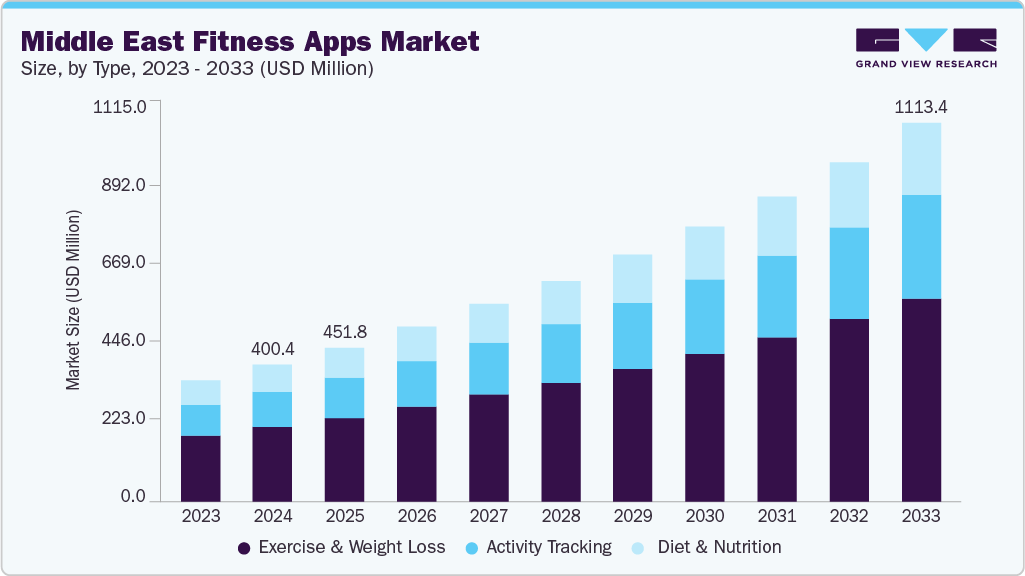
The Middle East fitness apps market size was estimated at USD 400.39 million in 2024 and is projected to reach USD 1,113.36 million by 2033, growing at a CAGR of 11.93% from 2025 to 2033. The growth of fitness apps in the Middle East is driven by rising health awareness and an increasing emphasis on preventive healthcare among consumers. High smartphone penetration and expanding internet infrastructure across countries such as Saudi Arabia, UAE, and Qatar make fitness apps widely accessible and convenient. In October 2024, Oysho launched a free sports training app in the UAE, offering over 1,200 sessions led by 70 international trainers across fitness, yoga, pilates, and running.
Rising Adoption of Fitness Apps in the Middle East: A Growing Trend
Growing awareness around physical fitness and preventive healthcare has significantly boosted the adoption of fitness apps across the Middle East. Consumers in countries like the UAE, Saudi Arabia, and Qatar are increasingly turning to digital platforms to monitor their health, manage weight, reduce stress, and maintain an active lifestyle. Rising concerns about chronic conditions such as obesity, diabetes, and cardiovascular diseases have prompted many individuals in the region to proactively use fitness apps to track exercise routines, diet plans, and overall wellness.
Digital Access Boosting Fitness App Adoption in the Middle East
In the Middle East, the widespread use of smartphones and high-speed internet has fueled the adoption of fitness apps, allowing users to access workouts, track progress, and receive personalized guidance anytime, anywhere. Fitness brands are increasingly responding to this demand for convenience and customization, offering tailored programs that fit diverse lifestyles and preferences. In April 2024, Fitness First launched its “Yoga is for Everyone” initiative across the UAE, offering a week-long series of inclusive yoga classes for all ages, genders, and fitness levels. The program aimed to break barriers around yoga, providing diverse sessions like Yin Yoga Chakra, Full Moon Yoga, and Post Natal Yoga to promote physical, mental, and emotional well-being.
The Role of Wearables in Enhancing Engagement in the Middle East
Wearable fitness devices such as Apple Watches, Fitbits, and Garmin trackers are increasingly driving engagement with fitness apps across the Middle East. These devices provide real-time data on steps, heart rate, calories burned, and sleep patterns, which, when synced with apps, enhance user insights, improve tracking accuracy, and enable more effective goal-setting.
Key Advantages for the Middle East Market:
-
Device-Agnostic Architecture: Supports both consumer and medical-grade wearables popular in the region, offering flexibility without vendor lock-in.
-
Normalized Metrics: Converts diverse data formats into a consistent structure, easing analysis across multiple devices used locally.
-
Real-Time Data Flow: Enables continuous live streaming during workouts for immediate feedback and adjustment.
-
Reduced Development Overhead: Streamlines app development by managing multiple device SDKs through a single API endpoint.
Example:
In the UAE, users engaging in guided workouts with Fitbit or Garmin smartwatches benefit from apps that leverage real-time biometric data. For instance, if heart rate spikes during a HIIT session, the app prompts rest; if activity drops, it suggests ramping up intensity. This continuous feedback enhances safety, motivation, and overall workout effectiveness. In April 2025, Abu Dhabi launched a prototype “gym of the future” with AI, sensors, and biometric scanners to collect real-time fitness data and generate personalized exercise, nutrition, and recovery plans. The system integrates with the Sahatna app for holistic health monitoring. This innovation supports the UAE’s shift toward proactive and preventive healthcare.
Top Fitness Apps in the Middle East
|
App name
|
Best for
|
Key Features
|
Platforms
|
|
Apple Fitness+
|
Integrated workouts on Apple
|
Apple Watch sync, guided workouts, metrics
|
iOS, Apple Watch
|
|
Fitbit
|
Daily activity & health tracking
|
Steps, heart rate, sleep, fitness score
|
Android, iOS, Fitbit wearables
|
|
Google Fit
|
Simplicity & Android integration
|
Move Minutes, Heart Points, integration with other apps
|
Android, iOS
|
|
MyFitnessPal
|
Nutrition & diet tracking
|
Food logging, calorie counter, macronutrient tracking
|
Android, iOS
|
|
Nike Training Club
|
Strength & endurance workouts
|
Guided workouts, training plans, video tutorials
|
Android, iOS
|
|
Strava
|
Running & cycling community
|
GPS tracking, leaderboards, social sharing
|
Android, iOS
|
|
Calm
|
Mindfulness & stress management
|
Guided meditation, sleep stories, breathing exercises
|
Android, iOS
|
Which Features Set the Best Fitness Apps Apart?
Leading fitness platforms distinguish themselves through several factors:
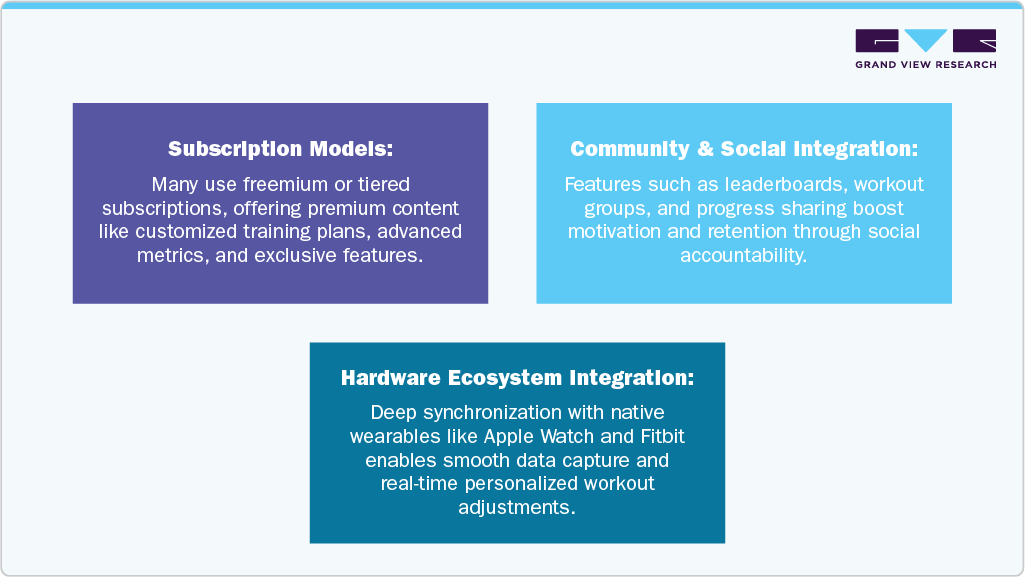
As user expectations grow, fitness app developers must innovate around these core elements to maintain relevance in the fast-evolving digital wellness market.
Fitness Apps in Preventive Healthcare & Lifestyle Management in the Middle East
The integration of fitness and healthcare is gaining momentum across the Middle East, driven by the region’s focus on proactive wellness and digital adoption:
-
Corporate Wellness Programs: Companies in the UAE, Saudi Arabia, and Qatar are leveraging wearable-linked fitness apps to run real-time step challenges and team leaderboards, boosting employee engagement while promoting healthier lifestyles.
-
Preventive Health Monitoring: Wearables now track heart rate, sleep patterns, and stress indicators, alerting users to early signs of overtraining, fatigue, or lifestyle-related risks such as obesity or diabetes.
-
Adaptive Coaching: AI-powered coaching within apps provides personalized recommendations based on real-time biofeedback, optimizing training, recovery, and nutrition for users across different age groups and fitness levels.
By combining biometric data with tailored guidance, these B2B and B2C platforms deliver outcome-focused engagement while supporting the region’s preventive healthcare initiatives.
Challenges, Opportunities & Future Outlook in the Middle East
Challenges:
-
Data Privacy & Compliance: Adhering to regional regulations like the UAE’s Data Protection Law while maintaining user trust.
-
Device Compatibility: Ensuring seamless integration across a diverse range of wearables and smartphones popular in the region.
-
Engagement Fatigue: Avoiding user burnout from excessive notifications or gamified alerts while keeping experiences meaningful.
Opportunities:
-
5G & Edge Computing: High-speed networks in cities like Dubai and Riyadh enable real-time, low-latency feedback during workouts and coaching.
-
Deeper Personalization: Combining metrics such as heart rate variability, sleep quality, and activity patterns to provide highly tailored experiences for users.
-
Hybrid Wellness Models: Integrating fitness, mental wellness, and nutrition into single platforms offers comprehensive value to both individuals and organizations.
Future Outlook:
-
Biofeedback-Driven Training: Increased adoption of metrics like heart rate variability, skin temperature, and electrodermal activity to optimize performance and recovery.
-
Mental Wellness Integration: Expansion of mood tracking, meditation, and stress management features alongside physical fitness monitoring.
-
Platform Convergence: Merging health, fitness, and medical care platforms into holistic, data-driven services involving insurers, wellness providers, and primary care networks across the region.
Case Study: Emirates NBD ‘Fitness Account’
Business Goal: Product adoption and deposit growth
Cause: Health
Tactics: Gamification, Behavior-based incentives
Background
The UAE faces high obesity rates and low savings among residents. Reports indicated that over 60% of the population was overweight or obese, and many residents experienced difficulty saving, leading to debt cycles. Emirates NBD aimed to address both issues through a single initiative.
Challenge
Solution
The Fitness Account linked financial incentives to physical activity. Users could earn interest based on daily steps tracked via mobile devices.
Process for Users:
-
Open a Fitness Account via the Emirates NBD Mobile Banking App.
-
Sync the account with compatible mobile devices.
-
Set daily step goals.
-
Earn daily interest based on steps:
-
0 steps/day = 0.2%
-
5,000 steps/day = 1%
-
12,000 steps/day = 2%
-
Track progress daily via the Emirates NBD Fitness App.
Execution
-
Mobile apps enabled tracking and calculation of interest based on activity.
-
Partnerships with fitness brands supported awareness and engagement.
-
Gamification elements encouraged consistent use.
Results
-
Collective steps logged in the first month: 53 million.
-
Total deposits in Fitness Accounts during the first month: AED 16.07 million.
-
Media coverage included Gulf News, T3, and Gulf Marketing Review.
-
EFMA recognized the initiative with an Innovation Award.
Key Insights
-
Linking behavioral incentives to measurable actions can influence both health and financial behaviors.
-
Mobile technology facilitates scalable tracking and reward systems.
-
Cross-domain initiatives (health + finance) can create measurable engagement without traditional marketing.
Market Concentration & Characteristics
The Middle East fitness apps market demonstrates a high degree of innovation, fueled by technological adoption, rising health awareness, and competition among regional and international developers. Companies are incorporating artificial intelligence (AI), machine learning, and real-time analytics to deliver personalized workout routines, nutrition guidance, and health insights tailored to local users. Augmented reality (AR) and gamification features are increasingly used to enhance engagement and adapt to regional fitness trends and preferences. In July 2025, ATHLO, a London-based fitness app and wellness platform, expanded into the UAE, offering flexible, non-subscription access to gyms and wellness providers. The app allows users to book, discover, and resell classes, promoting “wellness on your terms.”
The Middle East fitness apps industry shows a moderate level of mergers and acquisitions, primarily driven by strategic expansion and technology integration. Regional tech firms and fitness startups are being acquired to strengthen digital health offerings, improve app functionality, and increase market penetration across GCC and Levant countries. In April 2025, Saudi fitness app Miran merged with Egyptian platform Welnes to offer AI-driven workouts and personalized coaching, focusing on Saudi Arabia with plans for broader Middle East expansion. These M&A initiatives often aim to combine complementary services, accelerate innovation, and capture a larger user base in the growing regional market.
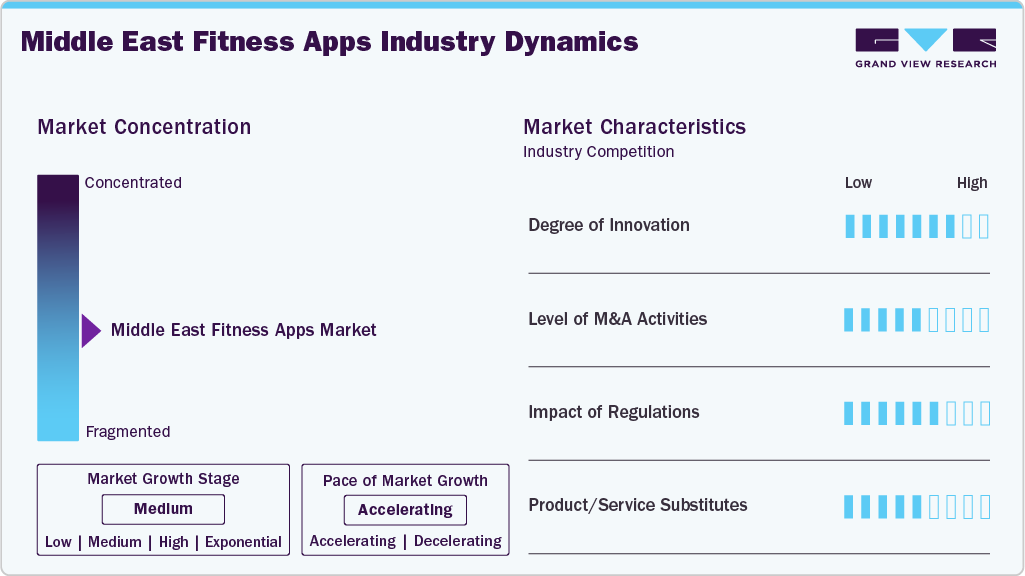
Regulations in the Middle East influence the fitness apps industry, particularly regarding user data protection, consent, and health information security. Fitness apps that collect sensitive data, such as heart rate, location, and exercise routines, must comply with regional privacy frameworks and guidelines, including those established in the UAE, Saudi Arabia, and other Gulf countries. In June 2022, a security flaw in the Strava fitness app exposed runs of Israeli officials at secret military bases, including Mossad and air force facilities. Fake GPS segments uploaded by a user revealed identities, locations, and activity details of over 100 personnel.
Product expansion in the Middle East fitness apps industry is moderate, as developers aim to cater to diverse user needs and regional preferences. Apps are increasingly integrating features such as personalized workouts, nutrition tracking, sleep monitoring, mental wellness programs, and live virtual classes. Expansion strategies often consider cultural factors and localized content to enhance adoption and engagement in the Middle Eastern market. For instance, in February 2023, Emirates Health Services (EHS) introduced its IT Innovation Strategy for 2023-2026, with the primary objective of modernizing healthcare delivery and fostering a culture of innovation within the organization. This strategic plan helps respond to the ever-changing healthcare landscape, aiming to enhance sustainability and bolster internal capabilities over the next few years.
Type Insights
On the basis of type, the exercise & weight loss segment dominated the Middle East Fitness Apps Market with a revenue share of 54.38% in 2024. This dominance is driven by increasing health awareness, rising rates of obesity and lifestyle-related conditions in countries such as Saudi Arabia, UAE, and Qatar, and the growing preference for structured workout programs accessible via mobile apps. Companies are forming strategic partnerships with local gyms, fitness influencers, and wellness platforms, while expanding app content to include regionally relevant workout plans, nutrition guidance, and culturally adapted fitness programs. In April 2024, the Fitness Time app was the most downloaded fitness and biometrics app in Saudi Arabia for 2023, moving up from second place in 2022, according to the Saudi Internet Report. The app’s success reflects Leejam Company’s digital transformation efforts to enhance customer experience.
Activity Tracking is expected to grow at the fastest CAGR over the forecast period due to increasing consumer demand for real-time health and fitness monitoring, driven by demand for real-time health and fitness monitoring. Adoption of wearable devices, such as smartwatches and fitness bands, in Saudi Arabia, UAE, and Qatar supports this growth. In March 2024, Saudi Arabia launched the Virtual Health Guide Service, leveraging app and wearable data for personalized health guidance and preventive care, including activity tracking and exercise recommendations, while the Health Tech Sandbox Incubator graduated its first startup cohort.
Platform Insights
Based on platform, iOS segment dominated the Middle East Fitness Apps Market with a revenue share of 52.02% in 2024. This is driven by high penetration of Apple devices in countries such as Saudi Arabia, UAE, and Qatar, and strong consumer spending on premium apps and in-app subscriptions. Seamless integration with Apple’s HealthKit and Apple Watch ecosystem enhances user experience and encourages adoption. The trend is expected to continue, with increasing adoption of wearable devices and AI-driven fitness features further boosting engagement and revenue in the iOS segment across the region.
Android is anticipated to grow at the fastest CAGR over the forecast period owing to the region’s expanding mobile internet infrastructure and rising smartphone penetration outside premium device segments. The affordability of Android devices makes fitness apps accessible to a broader population, including younger users and first-time smartphone owners. Integration with popular wearable devices and compatibility with a wide range of health and wellness apps further supports adoption. Increasing interest in digital fitness solutions across urban and semi-urban areas, along with government initiatives promoting active lifestyles, is fueling the growth of Android-based fitness apps in the region.
Devices Insights
Based on devices, smartphones held the largest market share of 66.99% in 2024. The growth of fitness apps in the Middle East is driven by widespread smartphone penetration across diverse demographics, from young adults in urban centers to professionals in emerging suburban areas. Mobile devices provide convenient access to on-the-go fitness tracking and virtual workouts, while seamless integration with popular wearables allows personalized experiences. In March 2025, Snap Fitness reacquired its UAE master franchise under Lift Brands, planning to expand both physical gyms and its member app. The app delivers 24/7 access, personalized training, and wellness content to smartphone users. This move reinforces Snap Fitness’ digital engagement and presence in the UAE fitness market.
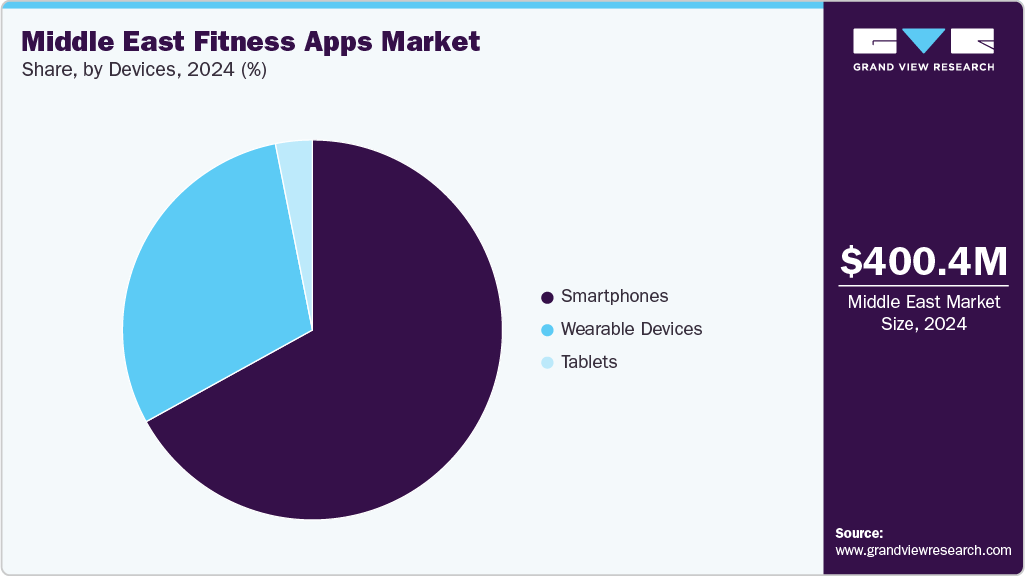
Wearable devices segment is forecasted to grow at the fastest CAGR over the forecast period driven by rising adoption of smartwatches and fitness trackers among urban populations. Wearables enable real-time health monitoring, personalized workout guidance, and seamless integration with mobile fitness apps. Growing consumer interest in tracking daily activity, heart rate, sleep patterns, and calories burned, along with supportive initiatives by tech companies and regional wellness programs, is accelerating the adoption of wearables across the region. In August 2025, Nimble AppGenie launched feature-rich fitness app platforms in the UAE, offering personalized workouts, real-time tracking, and wearable integration. The apps target both health-conscious consumers and healthcare providers, enhancing digital engagement.
Country Insights
Saudi Arabia Fitness Apps Market Trends
Based on country, Saudi Arabia held the largest market share in 2024 driven by high smartphone penetration, growing health awareness, and strong adoption of digital fitness solutions across urban centers and corporate wellness programs. In April 2025, Saudi health tech startup Kilow launched its fitness app, offering personalized weight loss coaching, health tracking, and access to GLP-1 medications like Ozempic and Wegovy. The app is currently available exclusively in Arabic within Saudi Arabia, targeting the local population with culturally tailored features.
UAE Fitness Apps Market Trends
UAE is anticipated to grow at a significant rate over the forecast period. The growth is driven by increasing health awareness, rising adoption of digital fitness solutions, and strong smartphone and wearable device penetration. Government initiatives promoting active lifestyles and wellness programs are encouraging more consumers to engage with fitness apps. In March 2022, OctaZone, a fitness app developed with UFC Champion Khabib Nurmagomedov, launched in the Middle East with Arabic language support. The app offers personalized, bodyweight-focused workouts, motivational sessions, and subscription-based unique training plans.
Key Middle East Fitness Apps Company Insights
Key players operating in the Middle East Fitness apps market are undertaking various initiatives to strengthen their market presence and increase the reach of their products and services. Strategies such as new product launches and partnerships are playing a key role in propelling the market growth.
Key Middle East Fitness App Companies:
- Apple Inc.
- Google LLC (Alphabet Inc.)
- Peloton Interactive, Inc.
- Azumio, Inc.
- MyFitnessPal, In
- Nike, Inc.
- Under Armour, Inc.
- Zwift Inc.
- Strava, Inc.
- Calm.com, Inc.
These trends highlight key shifts for digital wellness players
-
App developers must ensure seamless performance across iOS and Android devices and integrate popular wearables, catering to a tech-savvy yet diverse regional user base.
-
Fitness brands are moving from passive content to interactive, real-time experiences that leverage users’ health and activity data, reflecting the region’s growing interest in personalized digital fitness solutions.
-
Healthcare providers and insurers in the Middle East are increasingly using fitness app data to support preventative care programs and deliver personalized wellness guidance tailored to regional lifestyle and health patterns.
Recent Developments
-
In October 2024, Oysho launched its Training App in the Middle East, offering over 1,200 workouts including fitness, yoga, pilates, and running for all levels. The app features 70+ international trainers, live sessions, and both online/offline access. It integrates with smartwatches to track metrics like BPM, calories, and distance, enhancing personalized fitness experiences in the UAE and beyond.
-
In April 2024, Whoop expanded into the Middle East, targeting the Gulf region’s growing digital health market with its low-profile, screenless fitness wearables. The brand strengthened its C-suite and introduced AI-powered features like Whoop Coach for personalized health and performance insights.
-
In August 2022, Your Fitness Coach (YFC) launched its holistic fitness app in Dubai, allowing users to track workouts, access gyms, follow certified training programs, and earn rewards. The app enables monetization of activity through “Y-coins” redeemable for fitness products and classes.
Middle East Fitness Apps Market Report Scope
|
Report Attribute
|
Details
|
|
Market size value in 2025
|
USD 451.82 million
|
|
Revenue forecast in 2033
|
USD 1,113.36 million
|
|
Growth rate
|
CAGR of 11.93% from 2025 to 2033
|
|
Actual data
|
2021 – 2024
|
|
Forecast data
|
2025 – 2033
|
|
Quantitative units
|
Revenue in USD million/billion, and CAGR from 2025 to 2033
|
|
Report coverage
|
Revenue forecast, company ranking, competitive landscape, growth factors, and trends
|
|
Segments covered
|
Type, platform, devices, country
|
|
Country scope
|
Saudi Arabia; UAE; Kuwait; Qatar; Oman
|
|
Key companies profiled
|
Apple Inc.; Google LLC (Alphabet Inc.); Peloton Interactive, Inc.; Azumio, Inc.; MyFitnessPal, Inc.; Nike, Inc.; Under Armour, Inc.; Zwift Inc.; Strava, Inc.; Calm.com, Inc.
|
|
Customization scope
|
Free report customization (equivalent up to 8 analysts working days) with purchase. Addition or alteration to country, regional & segment scope.
|
|
Pricing and purchase options
|
Avail customized purchase options to meet your exact research needs. Explore purchase options
|
Middle East Fitness Apps Market Report Segmentation
This report forecasts revenue growth at country levels and provides an analysis on the latest industry trends and opportunities in each of the sub-segments from 2021 to 2033. For the purpose of this study, Grand View Research has segmented the Middle East fitness apps market report on the basis of type, platform, devices, and country.
-
Type Outlook (Revenue, USD Million, 2021 – 2033)
-
Exercise & Weight Loss
-
Diet & Nutrition
-
Activity Tracking
-
-
Platform Outlook (Revenue, USD Million, 2021 – 2033)
-
Devices Outlook (Revenue, USD Million, 2021 – 2033)
-
Smartphones
-
Tablets
-
Wearable Devices
-
-
Country Outlook (Revenue, USD Million, 2021 – 2033)
-
Saudi Arabia
-
UAE
-
Kuwait
-
Qatar
-
Oman
-
Frequently Asked Questions About This Report
b. The middle east fitness app market size was estimated at USD 400.4 million in 2024 and is expected to reach USD 451.8 million in 2025.
b. The middle east fitness app market is expected to grow at a compound annual growth rate of 11.9% from 2025 to 2033 to reach USD 1,113.4 million by 2033.
b. The exercise & weight loss segment dominated the middle east fitness app market and held the largest revenue share of 54.4% in 2024.
b. Saudi Arabia dominated the middle east fitness app market with a share of 35.8% in 2024. This is attributable by high smartphone penetration, growing health awareness, and strong adoption of digital fitness solutions across urban centers and corporate wellness programs.
b. Some key players operating in the CRM devices market include Apple Inc., Google LLC (Alphabet Inc.), Peloton Interactive, Inc., Azumio, Inc., MyFitnessPal, Inc., Nike, Inc., Under Armour, Inc., Zwift Inc., Strava, Inc., and Calm.com, Inc.
link