


The opportunities that almost every resident of a more or less developed country has today would have seemed completely fantastical some 70 years ago. Now we can send instant messages and photos, and make calls to anyone anywhere in the world. We can watch TV channels and listen to radio broadcasts from all over the world. We receive long-term weather forecasts and are informed in advance about dangerous weather conditions.


All this is possible thanks to telecommunications satellites, which have become the true foundation of modern civilization. In this article, we will tell the story of their emergence and development.
From theory to practice
It is believed that the idea of using satellites in geostationary orbit to relay radio signals was first proposed in the article “Extra-terrestrial Relays,” written by Arthur C. Clarke in October 1945. Because of this, the writer is often referred to as the father of all geostationary satellites, and the corresponding orbit is called the Clarke belt.


The first space communication projects saw the light of day even before the launch of the first artificial satellite. Interestingly, not all of them involved the use of spacecraft. For example, the authors of the Moon Relay project wanted to use the Moon as a natural radio signal repeater – the plan was for signals to bounce off the lunar surface and then reach their intended recipients on another continent. Moreover, scientists even managed to achieve success, clearly demonstrating the possibility of sending messages in this way. However, shortly after the beginning of the space age, the exotic project was closed, as it became clear that satellite communications had many obvious advantages.


The first satellite for transmitting messages was SCORE (Signal Communications by Orbiting Relay Equipment). Launched at the end of 1958, it successfully demonstrated the possibility of relaying signals using a spacecraft. In addition, it went down in history as the first satellite to transmit a human voice from space. It was President Eisenhower’s Christmas greeting.
The success of SCORE led to new experiments. In one of them, NASA launched a 30-meter inflatable sphere called Echo into space, which was then used as a passive repeater for radio signals.


But the real revolution happened on July 10, 1962. That day, a Thor-Delta rocket sent the first active communications satellite, Telstar 1, into orbit. It provided telephone and television broadcasts between Europe and America. Although Telstar 1 only operated for seven months, this was enough to change our world forever. The device, which resembled a soccer ball, clearly demonstrated all the key advantages of using telecommunications satellites.

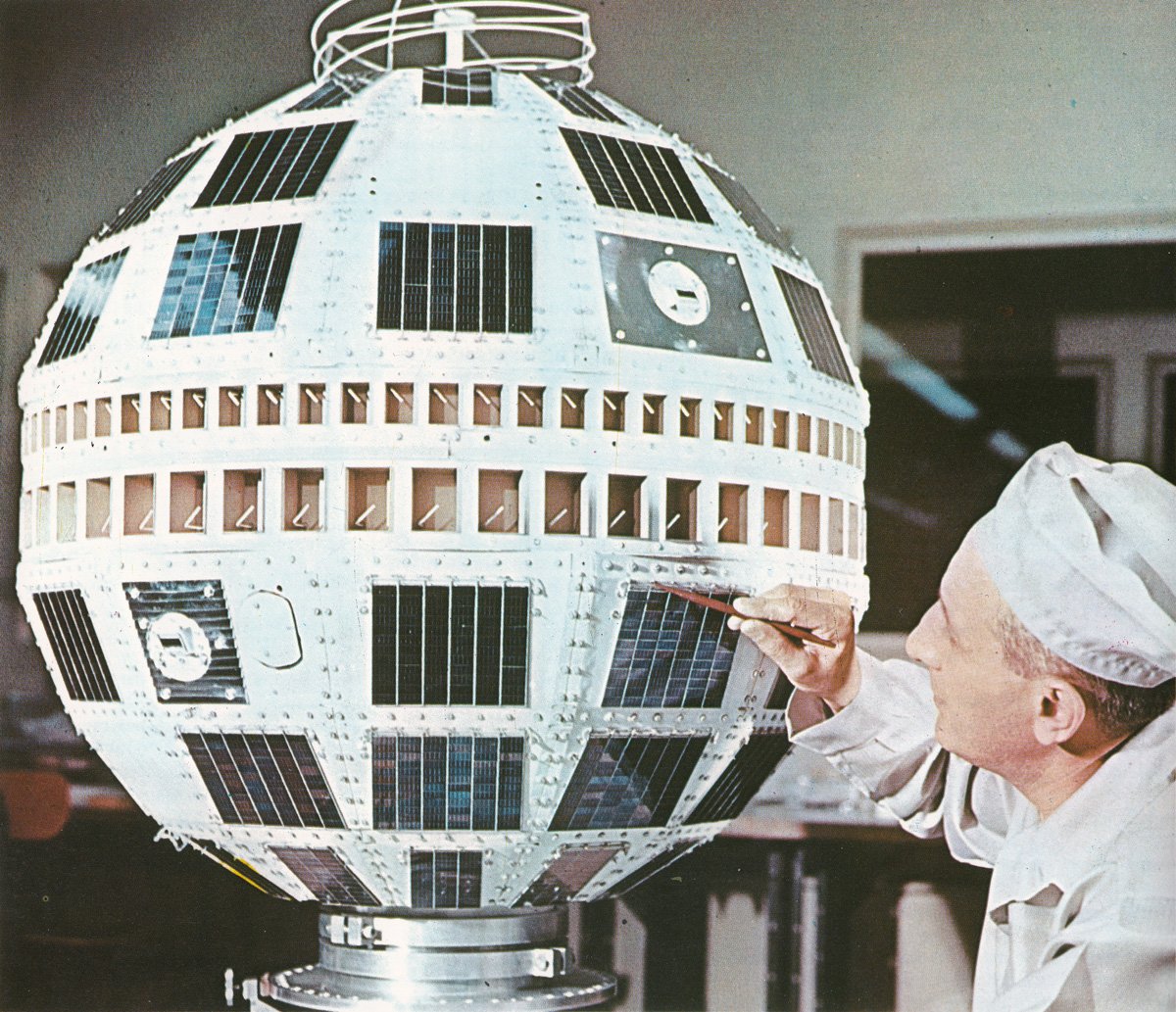
Ironically, Telstar 1 failed not because of internal problems, but as a result of the Starfish Prime nuclear test. But despite the fact that 60 years have passed since the satellite was launched, it is still in Earth orbit. Therefore, it is possible that in the future, Telstar 1 will be “picked up” by space archaeologists and transferred to a museum.
The emergence of satellite communications
The next milestone was reached in 1964, when Syncom 3 was launched into space, becoming the first geostationary communications satellite in history. It was positioned near the international date line in the Pacific Ocean and was used to broadcast live television coverage of the opening ceremony of the Summer Olympics in Tokyo to the United States. The following year, the Intelsat I satellite took up a geostationary position over the Atlantic Ocean, becoming the world’s first commercial spacecraft. Thus, Arthur C. Clarke’s prophecy finally came true.


In the following years, as the new industry developed and strengthened, increasingly complex devices with ever higher bandwidth were sent into space. Another important area was meteorology. Back in 1960, the TIROS-1 satellite successfully transmitted the first image of Earth from space, clearly demonstrating the capabilities of spacecraft for weather monitoring. The successful experiment led to the creation of specialized satellites for collecting meteorological data and tracking dangerous natural phenomena. Their active deployment began in the late 1960s and early 1970s. At the same time, programs for continuous remote sensing of Earth from space began to be implemented, many of which continue to this day.


The active exploration of new orbits also began. The fact is that, despite all their obvious advantages, geostationary satellites are invisible from high latitudes and are not suitable for providing communications and organizing television and radio broadcasts in the Far North, the Arctic, and Antarctica. This problem was particularly acute for the USSR. The solution was to deploy Molniya satellites. They were launched into highly elliptical orbits with large inclinations and apogee heights of up to 40,000 km. Since, due to the laws of orbital mechanics, the spacecraft spends most of its time near the apogee point, these satellites were clearly visible in the high latitudes of the Northern Hemisphere, which solved the communication problem. It is not surprising that in the West, trajectories of this type have since been called “Molniya orbits.”


Another popular orbit was the polar orbit. It was particularly well-suited for placing satellites designed to observe the Earth and some meteorological devices.
Of course, the military also actively used the capabilities provided by satellites. In addition to photographing Earth from space and communications, they were also interested in another promising concept – the use of spacecraft for navigation purposes.
The Transit satellite system, which began deployment in the late 1950s, was the first of its kind. Initially, it was intended exclusively for the needs of the US Navy, but within a few years, it was already being used for some civilian tasks. The error in determining the position of a stationary object using this system was only 60 m (about two angular seconds), which was a very good indicator at the time.


The next step was an experiment conducted in 1967 using an atomic clock on the Timation-1 satellite. Its success paved the way for the development of next-generation navigation devices that provided much greater accuracy in determining coordinates than their predecessors. In 1973, the Pentagon approved the creation of a more advanced satellite navigation system, which later became known as GPS. Its first satellite was launched in 1978. It was used exclusively for military purposes until the Soviet Air Force shot down a South Korean Boeing. Since then, the system has also been used for civilian purposes to prevent such tragedies from happening again.


During those years, another important satellite system, Inmarsat, began operating. Initially, it was used for communication and transmission of distress signals from sea vessels, and later it also began to provide communication in hard-to-reach areas.
Global satellite communications and global internet
The 1990s marked a new stage in the development of the telecommunications industry. The end of the Cold War and the emergence of cheap Russian and Chinese launch services on the market contributed to a real boom in various satellite projects. The most interesting of these was called Iridium. Its goal was to create a global satellite telephone operator with 100% coverage of the Earth’s surface. The system got its name because it was originally supposed to have 77 devices – this number is the atomic number of the chemical element iridium.


The deployment of Iridium began in 1997, but two years later, the company filed for bankruptcy due to extremely low sales, which did not provide a return on investment. The main reasons for the commercial failure were unreasonably high tariffs, poor signal reception indoors, and the large size of satellite phones compared to “regular” mobile phones, which were rapidly gaining popularity.
Shortly after filing for bankruptcy, the operator’s management announced its intention to deorbit all of its satellites. However, the US government intervened, interested in the system’s capabilities. Its financial injections helped save Iridium. After reorganization, the company continued its activities and is still operating today. Currently, about 1.6 million subscribers use its services.


However, despite its remarkable rescue, Iridium never became the system that revolutionized space communications. That honor went to SpaceX’s Starlink satellites. Contrary to popular belief, it is not the first satellite internet system. Similar services were provided by Eutelsat, Viasat, and Iridium, among others. However, their satellite internet could not boast of high connection speeds, global coverage, or affordable rates for ordinary consumers.
The Starlink project was radically different from all its predecessors. Instead of geostationary satellites, SpaceX decided to rely on low-orbit devices placed on a large number of echelons with different orbital inclinations. This provided much higher data transfer speeds and global coverage of the entire globe. The downside was the truly enormous number of satellites required for the system to function. At the time of the project’s announcement, the largest satellite constellations were measured in double digits, while the creation of the Starlink group required the launch of many thousands of devices. So, of course, most people initially perceived the idea as just a publicity stunt.
However, SpaceX proved all the skeptics wrong. The combination of a cheap, reliable launch vehicle and the first truly mass-produced satellites in history clearly demonstrated the feasibility of such plans. There are now more than 8,000 satellites in orbit. The system is actively used in many regions of the globe, including Ukraine, helping our army to destroy Russian invaders. And this is just the beginning. Over the next few years, SpaceX intends to increase the number of satellites to five figures.


SpaceX’s successes have greatly encouraged its competitors with similar projects. For example, OneWeb has launched 654 satellites for its system into orbit. The deployment of Amazon’s Kuiper satellite internet system and its Chinese counterpart, Starlink, has already begun. Other companies and countries may well follow suit.
The future of the industry
The future of telecommunications satellites will be determined by several key trends. The first is their integration with systems designed to extend the service life of spacecraft. These include orbital tugs, refuelers, repairers, and other similar equipment. Recently, this market segment has been experiencing rapid growth. There are already several tugs operating in geostationary orbit, and their number will only increase in the coming years. This will affect the entire industry. Until recently, satellite operators had to send fully functional spacecraft into orbit just because they had run out of fuel. Space tugs and tankers make it possible to overcome this limitation and extend the service life of many satellites.

The second trend is miniaturization and cost reduction. Of course, due to their large mass and high cost, geostationary devices will remain virtually artificial goods for a long time to come. However, when it comes to lower orbits, there is reason to expect that satellite manufacturers will follow SpaceX’s example, striving for simplified design and assembly line production. The success of the CubeSat platform should not be forgotten. Satellites based on this platform are already serious competitors to traditional devices. Further advances in the miniaturization of electronics and instruments will allow them to further strengthen their position in the market.

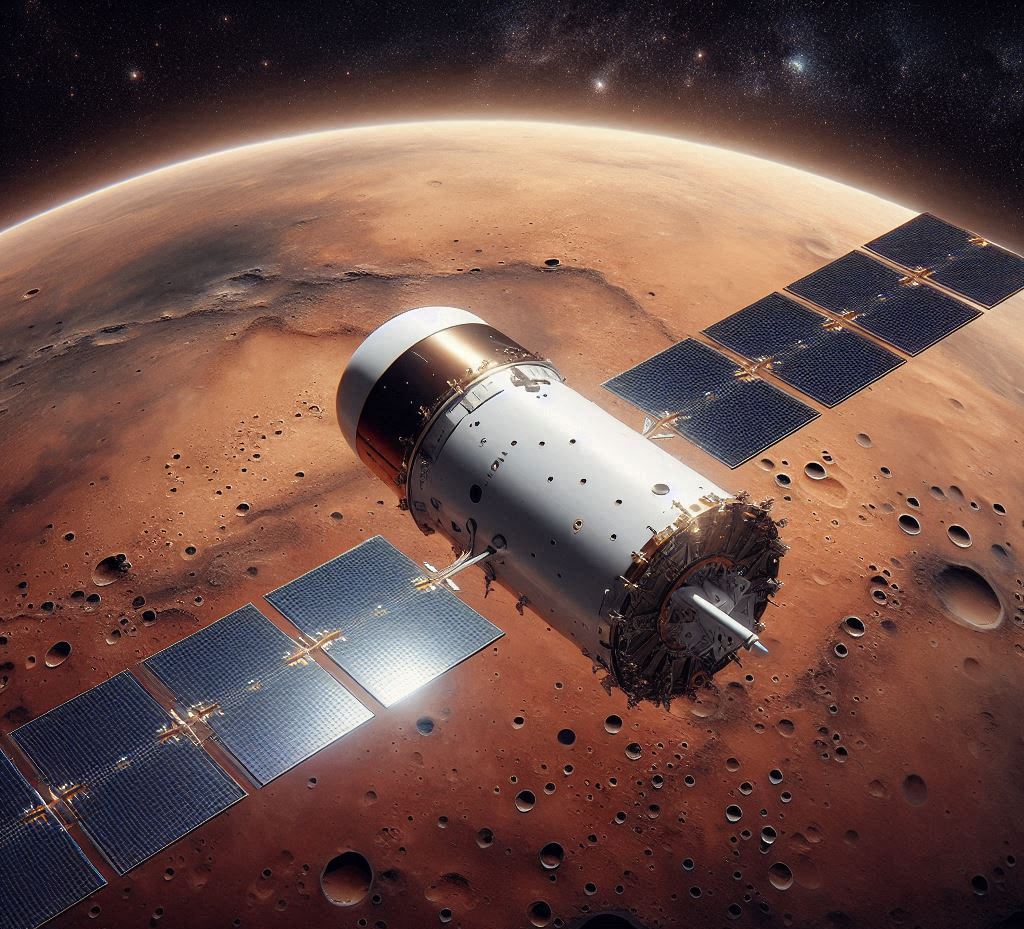
Finally, the third trend will be the creation of telecommunications clusters designed to meet the needs of lunar expeditions and bases that will be built on the surface of our planet’s natural satellite. Right now, leading space agencies are actively working on projects for spacecraft that will provide communication, navigation, and internet access to future conquerors of the Moon. The experience gained will be useful in the future when creating new satellites that will be used to accompany expeditions to the Red Planet.
This article was published in issue No. 1 (188) of Universe Space Tech magazine in 2022. You can purchase this issue in electronic or paper format from our store.
link