



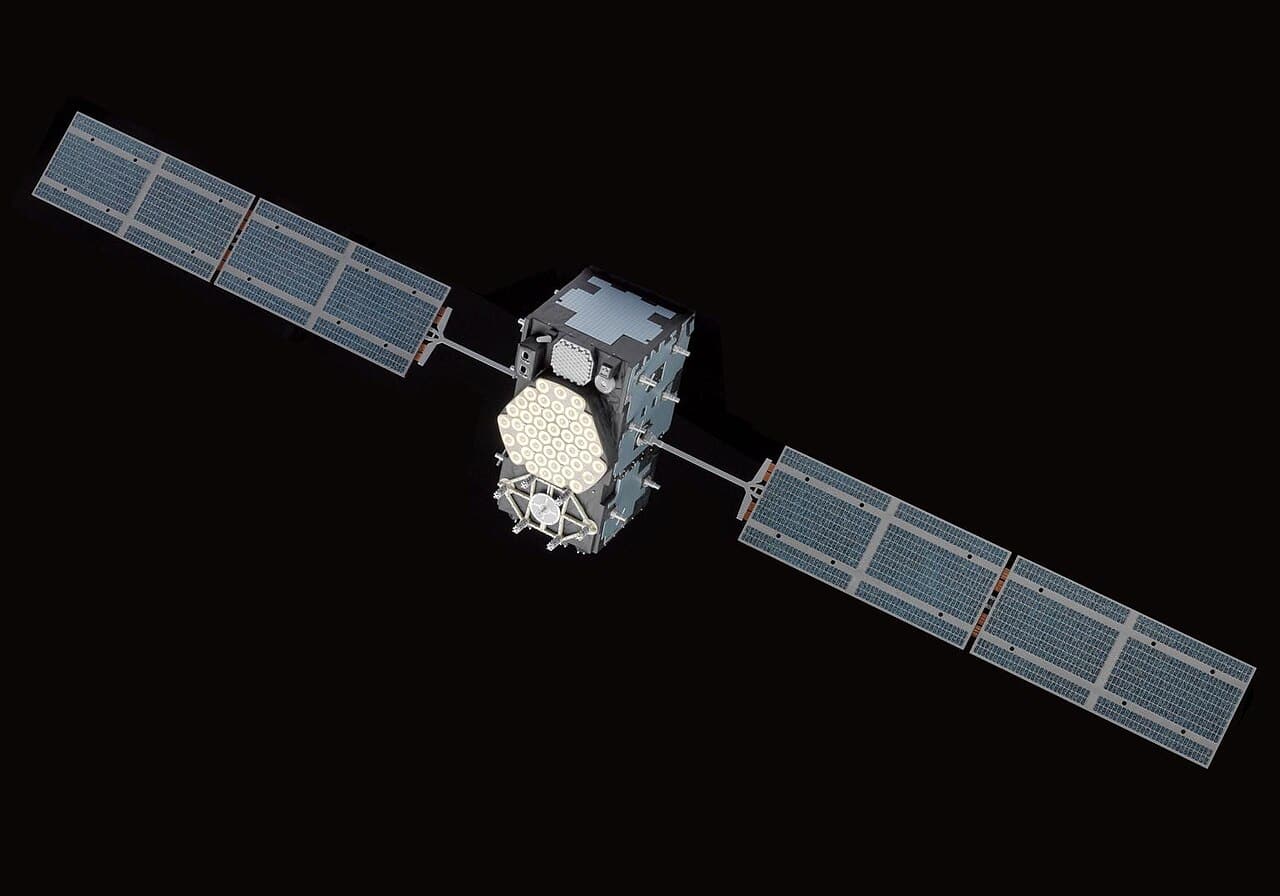
European defense and intelligence officials are increasingly concerned about the behavior of Russian surveillance satellites that are believed to have intercepted communications from at least twelve high-value European space assets.
According to officials cited in international reporting, two Russian spacecraft, Luch-1 and Luch-2, are suspected of conducting close-proximity operations that go beyond passive monitoring.
Authorities say these platforms may be capable not only of gathering sensitive signal intelligence but also of interfering with satellite positioning and, in extreme scenarios, contributing to service disruption or physical damage.
Russian satellites close tracking of Geostationary adssets
Over the past three years, the two Russian satellites have repeatedly maneuvered near European geostationary satellites. This pattern has unfolded during a period of sustained geopolitical tension following Moscow’s full-scale invasion of Ukraine in 2022.
Since its launch in 2023, Luch-2 alone has ap proached at least 17 European satellites and in several cases remained nearby for extended periods ranging from weeks to months. Such proximity operations are widely viewed by space security specialists as high-risk when conducted without coordination or transparency.
Germany’s military space command leadership has publicly stated that both Luch spacecraft are strongly suspected of signal intelligence missions, noting that they tend to position themselves extremely close to Western communications satellites.
Exploiting signal oaths and weak encryption
Senior European intelligence officials say the Russian satellites appear to deliberately place themselves within the narrow transmission beams linking ground stations and orbiting satellites. By operating inside these data cones, interception becomes technically easier.
The vulnerability is amplified by the age of some European satellites currently in service. Many were launched years ago with limited or outdated encryption protections. As a result, certain command and control links may be exposed to interception.
If command instructions are captured, a hostile actor could potentially replicate legitimate control signals and transmit false directives. Such spoofed commands could alter a satellite’s orientation or orbital stability, creating operational or safety risks.
Dual-Use networks at risk
Most of the monitored satellites primarily support civilian services such as television broadcasting. However, many of the same platforms also carry government and military communications traffic, making them strategically significant.
Security analysts place these activities within a broader hybrid warfare framework that includes cyber operations and sabotage targeting critical infrastructure layers.
Germany’s defense minister has warned that orbital communication networks represent a structural weak point for modern societies, arguing that hostile space operations now constitute a direct and systemic security threat that governments can no longer afford to overlook.
link