
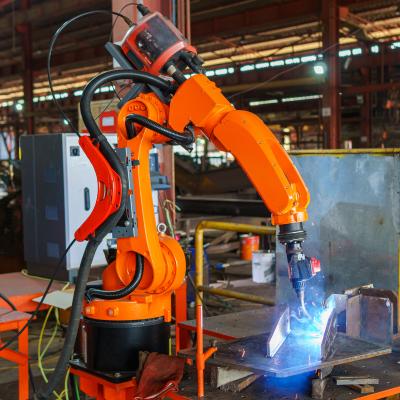
In 2024, the Global Industrial Robots Market was valued at $15.91 Billion, and is projected to reach a market size of $35.4 Billion by 2030. Over the forecast period of 2025-2030, market is projected to grow at a CAGR of 12.1%.
Request Sample @ https://virtuemarketresearch.com/report/industrial-robots-market/request-sample
The global industrial robots market is witnessing significant growth, driven by several long-term market drivers. One such driver is the increasing demand for automation across industries. Automation offers several benefits, including increased efficiency, improved quality, and reduced operational costs. The COVID-19 pandemic has further accelerated the adoption of automation, as companies seek to minimize human contact and ensure business continuity. The pandemic has highlighted the importance of automation in maintaining production levels during disruptions, leading to increased investments in industrial robots.
In the short term, a key market driver is the growing focus on workplace safety. Industrial robots help reduce the risk of workplace accidents by taking over hazardous tasks. This increased focus on safety is driving the adoption of industrial robots, particularly in industries with high-risk environments such as manufacturing and construction. Additionally, the COVID-19 pandemic has created opportunities for the industrial robots market. The need for social distancing and remote work has led to increased demand for robots that can perform tasks autonomously or with minimal human intervention. This has created opportunities for companies offering robotic solutions for tasks such as cleaning, disinfection, and package delivery.
One major opportunity in the industrial robots market is the integration of artificial intelligence (AI) and machine learning (ML) technologies. AI and ML can enhance the capabilities of industrial robots, enabling them to learn from experience and adapt to new tasks. This can improve the efficiency and flexibility of industrial robots, making them more suitable for a wider range of applications. Companies that can successfully integrate AI and ML into their robotic solutions stand to gain a competitive advantage in the market.
A trend observed in the industrial robots market is the increasing use of collaborative robots, or cobots. Cobots are designed to work alongside humans, helping to improve productivity and efficiency. They are equipped with advanced sensors and software that allow them to safely interact with human workers. The adoption of cobots is expected to continue growing, particularly in industries where close collaboration between humans and robots is required, such as in assembly lines and warehouses.
Overall, the global industrial robots market is poised for significant growth, driven by long-term market drivers such as automation and short-term drivers such as workplace safety concerns. Opportunities exist for companies that can integrate AI and ML technologies into their robotic solutions, while the trend towards collaborative robots is expected to continue shaping the market in the coming years.
Enquire Before Buying @ https://virtuemarketresearch.com/report/industrial-robots-market/enquire
Segmentation Analysis:
The global Industrial Robots Market segmentation includes:
By Type: Traditional Industrial Robots, Collaborative Robots.
The largest segment in the industrial robots market is the Traditional Industrial Robots, particularly the sub-segment of Articulated Robots. These robots are highly adaptable and find extensive use in various industries for tasks like assembly, palletizing, welding, and painting. Their ability to move along multiple axes makes them versatile for different manufacturing processes, contributing to their dominance in the market.
The fastest-growing segment in the industrial robots market is the Collaborative Robots segment. Also known as cobots, these robots are designed to work alongside human workers safely. They are equipped with sensors and cameras to detect human presence and adjust their movements accordingly, reducing the risk of accidents. The collaborative robots segment is experiencing rapid growth due to the increasing adoption of automation and the need for safer working environments.
By Industry: Automotive, Electrical And Electronics, Plastics, Rubber, And Chemicals, Metals And Machinery, Food And Beverages, Others.
The automotive industry is the largest segment in the industrial robots market. This is driven by factors such as the need for automation to meet increasing demand, advancements in electric vehicles and energy-efficient drive systems, and the competitive landscape pushing manufacturers to enhance operational efficiency. As a result, industrial robots are widely used in automotive manufacturing for tasks like welding, painting, and assembly.
The fastest-growing segment by industry is the Pharmaceuticals industry. The pharmaceutical sector is increasingly adopting automation, including industrial robots, to improve manufacturing processes, ensure product quality, and meet regulatory requirements. The need for precision, efficiency, and flexibility in pharmaceutical manufacturing is driving the demand for industrial robots in this sector.
Buy Now @ https://virtuemarketresearch.com/checkout/industrial-robots-market
Regional Analysis:
In terms of region, Asia-Pacific (APAC) is the largest market for industrial robots. APAC’s dominance is driven by factors such as rising labor costs, increasing demand for automation to maintain cost advantages, and government incentives for foreign direct investment (FDI). Countries like China, Japan, and South Korea are major contributors to the industrial robots market in the APAC region.
Latin America is the fastest-growing region in the industrial robots market. The region is experiencing rapid growth due to the increasing demand for digital solutions to manage equity investments across various industries. Additionally, the growing presence of venture capital firms and private equity firms in Latin America is driving the adoption of industrial robots for automation and efficiency improvements.
Latest Industry Developments:
Certainly, here are three trends regarding strategies adopted by companies in the industrial robots market to enhance their market share:
– Focus on Collaborative Robotics: Companies in the industrial robots market are increasingly focusing on collaborative robotics, also known as cobots. These robots are designed to work alongside human workers safely, enhancing productivity and efficiency while ensuring worker safety. Recent developments in cobot technology include advanced sensors and artificial intelligence algorithms that enable better human-robot interaction and task sharing. Collaborations with research institutions and technology partners are driving innovation in cobot design and functionality, allowing companies to differentiate themselves in the market and capture a larger share.
– Integration of Artificial Intelligence (AI) and Machine Learning (ML): Another trend observed in the industrial robots market is the integration of artificial intelligence (AI) and machine learning (ML) capabilities into robotic systems. Companies are leveraging AI and ML algorithms to improve robot performance, optimize manufacturing processes, and enable predictive maintenance. By analyzing vast amounts of data collected from sensors and other sources, industrial robots can adapt to changing production environments, identify potential issues before they occur, and continuously optimize their performance. Collaborations with AI and ML experts, as well as investments in research and development, are driving the integration of these technologies into industrial robot systems, allowing companies to offer more advanced solutions and gain a competitive edge in the market.
– Strategic Partnerships and Acquisitions: Companies in the industrial robots market are increasingly forming strategic partnerships and making acquisitions to expand their product offerings, reach new markets, and strengthen their competitive position. Recent examples include partnerships between robot manufacturers and software companies to develop integrated solutions for specific industries or applications, as well as acquisitions of smaller robotics firms to access new technologies or talent pools. By collaborating with complementary businesses and acquiring innovative startups, companies can enhance their market share by offering comprehensive solutions that meet the evolving needs of customers. These partnerships and acquisitions also enable companies to accelerate their product development cycles and maintain a leadership position in the rapidly evolving industrial robots market.
Read More @ https://virtuemarketresearch.com/report/industrial-robots-market
About Us:
Virtue Market Research is a strategic management firm helping companies to tackle most of their strategic issues and make informed decisions for their future growth. We offer syndicated reports and consulting services. Our reports are designed to provide insights on the constant flux in the global demand-supply gap of markets.
103 Kumar Plaza,SRPF Road,
Ramtekadi,Pune,
Maharashtra – 411013
“Virtue Market Research stands at the forefront of strategic analysis, empowering businesses to navigate complex market landscapes with precision and confidence. Specializing in both syndicated and bespoke consulting services, we offer in-depth insights into the ever-evolving interplay between global demand and supply dynamics. Leveraging our expertise, businesses can identify emerging opportunities, discern critical trends, and make decisions that pave the way for future success.”
This release was published on openPR.
link