
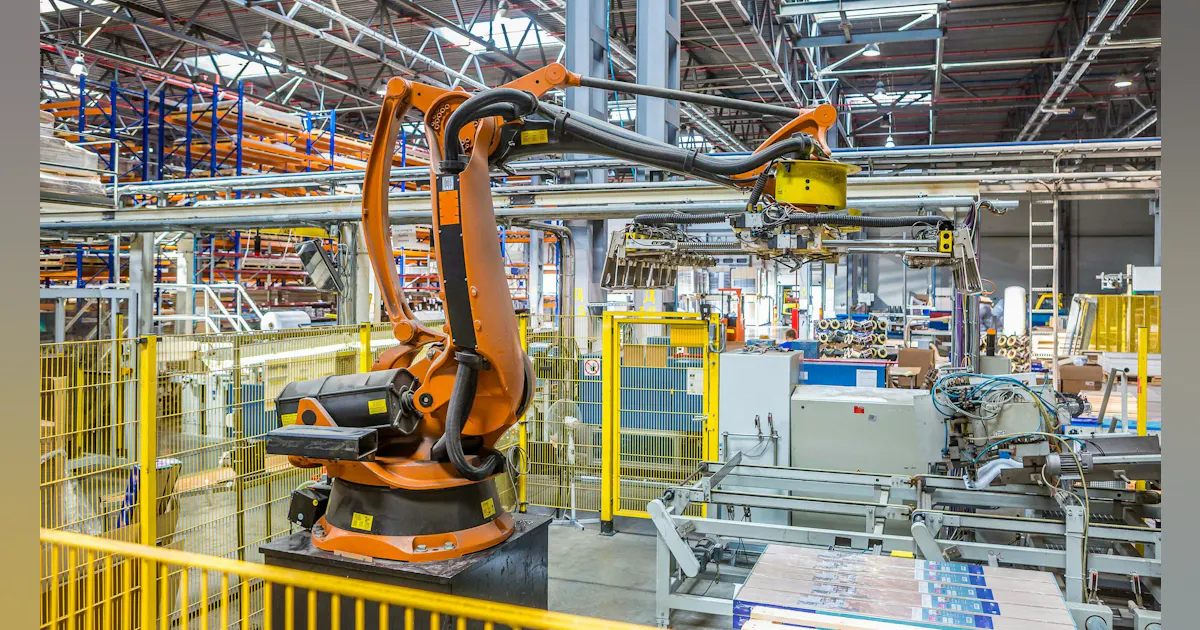
Ensuring seals can withstand these operational requirements and enable the robot to continuously perform as desired factors into the seal design and the type chosen for a given application. When working with customers to determine the right seal technology for their robot design, Cheng said Freudenberg looks at several criteria, collectively named STAMP:
S – Speed
T – Temperature
A – Application
M – Medium
P – Pressure.
Understanding each of these aspects is necessary to ensure the right materials and physical properties are chosen to meet an end user’s performance requirements.
The operational speed of a robot, for instance, determines the operational conditions in which a seal will work due to the amount of torque generated. “If our materials are not robust enough, [the seal] will be destroyed during movement,” said Cheng.
Will grease, oil or other medium be used with the seals? This too is important to understand to ensure the right seal material is selected.
The end application in which a seal is used is also a critical determining factor for a seal’s design. If the robot will be used in a clean room or the food and beverage industry, special materials such as those approved by the FDA (U.S. Food and Drug Administration) must be utilized for a seal. There may also be regional standards which need to be considered.
Read “Robots Improve Cleanliness in Manufacturing Operations” to learn more about the use of robots in clean rooms and other applications requiring a high degree of cleanliness.
Also knowing where on a robot sealing technology will be used. While the joints are where they are commonly used, they can also be located on the body of the robot as well as the end effectors, all of which determines the type of seal to employ.
Other important considerations that Goings noted are available space and friction. He said space is always an issue for customers and they are looking for the smallest sealing solution possible. Typically, the seal needs to fit within an existing envelope though ideally, he said Freudenberg would prefer to work with the customer to design the seal into the robot early on in the development process.
These space constraints may require the creation of a customized seal because a typical seal will not fit in the given space, said Cheng. In these cases, the seal needs to not only be small in size but also utilize a material thin enough to easily fit in the space without sacrificing desired performance characteristics such as lack of friction.
Friction is the number one factor customers consider when choosing a seal, said Goings, because they want zero friction. If friction occurs, it can cause heat buildup and other issues which have a negative impact on performance. “We’re always trying to take this into account in the design we’re offering,” he said. “We have to be aware of the space availability, which is a challenge, and to minimize as much as possible the friction and drag.”
link